When Your Top Performer Is Holding Back the Firm
What do you do when the leader you’re most afraid to lose keeps choosing work that strengthens her department and weakens the company?
 By Scott Mann, Founder + Lead Business Development Director
In this story 3 sections
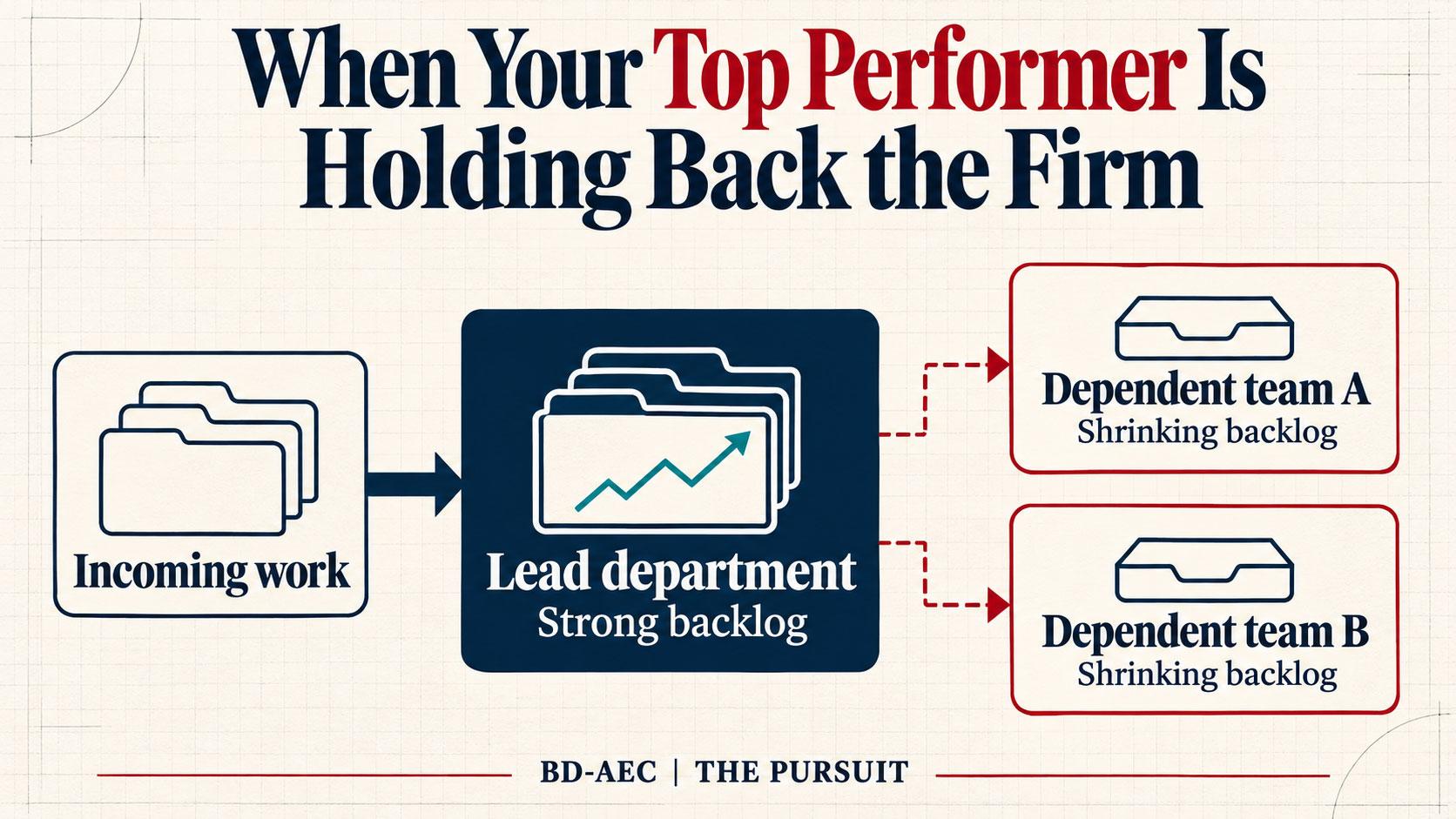
At every financial review, one department posts strong results. Its leader wins profitable work, clients trust her, and her team is busy. The other departments are losing money. They’re asked to explain their shrinking backlogs and come back next quarter with a plan.
Those departments have historically brought in more revenue combined than the lead department. Much of their work starts with opportunities the lead department brings into the firm. When its leader repeatedly chooses assignments that reward her own group and leave little work for the others, her numbers can improve while the company loses a larger source of revenue.
In The One-Firm Firm Revisited, David Maister and Jack Walker describe a “warlord” model that gives entrepreneurial leaders considerable autonomy and a “one-firm firm” model built on close cooperation across practices. I see good reasons for an AEC firm to give its department heads broad authority. They know their markets, can make decisions quickly, and are accountable for their results. That authority comes with a responsibility to consider what their decisions do to the rest of the company. Sometimes that means backing an opportunity that benefits another department more than their own. The One-Firm Firm Revisited
The Cost of Putting Off the Conversation
The department head is proud of what she’s built, and she has reason to be. She’s also come to believe she’s the smartest person in the room. When her peers question the work she pursues, she points to her results and asks why they can’t win more work on their own. The meetings grow contentious. Eventually, people stop raising the issue.
The owner knows a hard conversation is overdue. He also knows which clients call the department head directly and which staff might follow her if she leaves. With the other groups already struggling, he puts off the conversation and asks them for another recovery plan.
The firm starts borrowing to cover their losses. The departments with less work face tighter targets, more scrutiny, and blame for backlogs shaped partly by decisions they had little say in. Each quarter, more cash goes to debt payments and less is available to retain people, pursue work, or staff up when a job comes in. By the time the firm finds an opportunity it needs, it may struggle to deliver it.
Keep the Autonomy and Address the Dependence
I’d start with a few recent pursuits. Where did the department head’s freedom to act help the firm win? Where did her choices leave other teams short of work they could have delivered? What would those teams have needed to do to earn her confidence in front of a client? The answers help the owner decide what needs to change and how much autonomy she can keep.
- Change what she gets credit for. Recognize the work her department wins and the work she helps other teams win. Ask her to identify opportunities they could pursue together and explain what she needs from her peers to bring them into a client relationship with confidence.
- Address the behavior directly. Point to specific instances when she dismissed a colleague or overrode an agreement. Set expectations for how she’ll handle disagreements and which decisions require input from other teams. Agree on a date to review what happened on the next few pursuits.
- Reshape her role around her strengths. She could lead complex technical work and major accounts while another leader takes responsibility for staffing and cross-department pursuits. The owner could also split the department into two practices, each with its own people, client access, and authority. One could focus on the challenging work she’s good at winning, while the other pursues work that draws on several departments.
- Develop another source of work. Build a parallel practice in a market that needs the firm’s combined services, or help the dependent teams win work directly. If cash is tight, start with a few credible opportunities the firm can pursue with the people it already has.
An environmental engineer once told me, “Dilution is the solution to pollution.” I think of that line when too many clients, opportunities, and decisions depend on one person. The owner can give other leaders meaningful roles on key accounts and make sure they’re ready to step in on active projects. That gives clients and staff time to build trust with more people at the firm and gives the owner options if the department head leaves.
If she keeps overriding agreements after the owner has made expectations clear and addressed legitimate concerns, he has to decide whether to narrow her authority or prepare for a leadership transition.
Where I Work With the Owner
Through BD-AEC’s embedded Growth Engine, I work directly with owners on both sides of business development. In the market, we look for work the firm can win and deliver. Inside the business, I help the owner see where the firm depends on the high performer, weigh what he can afford to change, and prepare for the conversation. Then I stay involved on live pursuits so we can see whether leaders follow through and whether the work is reaching the teams that can deliver it.
If your strongest department is posting good numbers while the teams that depend on it are running out of work, let’s look at a few recent pursuits together. We can start with who made the decisions, what those choices meant for the rest of the firm, and what you’re worried might happen if you raise the issue.
About this story
Written byScott MannFounder + Lead Business Development Director, BD-AEC
- Issued
- November 24, 2026
- Corrections
- Spotted an error? Tell us.